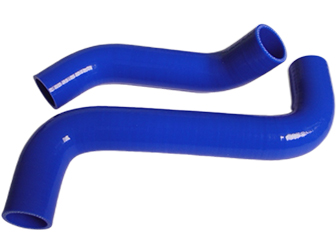
Choosing the right silicone hose is not simply a matter of selecting the correct diameter. The hose must also match the working medium, temperature, pressure, movement, connection method, and installation space. A hose that looks suitable on paper may still be unsuitable if its material construction or reinforcement does not match the actual service conditions.
For B2B buyers, engineers, and purchasing teams, understanding these factors before ordering can help avoid compatibility problems, installation issues, and unnecessary design changes later.
Key Takeaways
-
Select a silicone hose according to the medium, temperature, pressure, vacuum, movement, and installation conditions of the actual application.
-
Reinforcement, inner lining, and hose construction affect pressure resistance, flexibility, dimensional stability, and media compatibility.
-
Fuel cell applications require different hose constructions for coolant, cathode, and anode circuits because each circuit carries a different medium and has different material requirements.
-
Complex silicone hoses can be developed around drawings, samples, dimensions, branch configurations, reinforcement requirements, and connection details.
Start With the Application and Medium
The first step is to identify where the hose will be used and what will pass through it.
Silicone hoses are used in many systems, including vehicle cooling systems, turbo and charge-air systems, air intake systems, vacuum lines, heater systems, food-processing equipment, industrial machinery, and fuel cell power systems.
The medium is particularly important because silicone is not automatically suitable for every fluid.
For example, the question “Can silicone hose be used for fuel?” cannot be answered simply with yes or no. Standard silicone should not be selected for direct fuel service only because it has good temperature resistance. The fuel type, exposure conditions, temperature, and required inner material all need to be considered. A fuel-resistant construction or suitable inner lining may be required.
The same applies to the question “Can silicone hose be used for oil?” Oil compatibility depends on the specific oil, operating temperature, exposure conditions, and hose construction. For applications involving oil, fuel, or aggressive chemicals, the inner surface should be considered separately from the outer silicone structure.
This is why the application and medium should be defined before choosing the hose structure.
Check Temperature, Pressure, Vacuum, and Movement
After identifying the application, check the actual service conditions.
Temperature is one of the main reasons silicone is selected for demanding hose applications. However, the relevant value is not simply the maximum temperature that the material can tolerate. Continuous operating temperature, temperature changes, contact medium, and the overall hose construction should be considered together.
Pressure is another important factor. A hose used in a pressurized cooling or charge-air system may require reinforcement to maintain dimensional stability and pressure resistance.
Bursting pressure is influenced by factors including reinforcement design, hose diameter, wall construction, and the test conditions used for evaluation. More reinforcement or a different construction can raise the minimum bursting pressure, but the final value depends on the specific hose geometry and material.
Vacuum applications have different requirements. A hose may need sufficient resistance to collapse when negative pressure is present.
Movement should also be considered during hose selection. In vehicle applications, hoses can experience vibration, engine movement, repeated flexing, and changes in position during operation. A
flexible silicone hose can be useful where the connection needs to accommodate movement, but flexibility still needs to be balanced with reinforcement and installation geometry.
Before selecting a hose, consider:
-
Continuous and peak operating temperature
-
Working pressure and pressure fluctuations
-
Vacuum conditions, if applicable
-
Vibration and movement
-
Required flexibility
-
Installation space
-
Frequency of movement or flexing
Looking at these conditions together gives a more realistic basis for hose selection than choosing by size alone.
Select the Right Hose Construction
Silicone hoses can be manufactured with different reinforcement structures depending on the required performance.
Available constructions can include polyester, aramid, and wire reinforcement. Other construction options include fluorosilicone, fluororubber (FKM) lining, fire-retardant silicone, food-grade silicone, and integrated metal parts, depending on the application.
Each construction changes the balance between pressure resistance, flexibility, dimensional stability, and installation characteristics.
For example, a reinforced hose may be more suitable for an application where pressure resistance is important. A different construction may be preferable when flexibility or weight is a greater concern.
More reinforcement does not automatically mean that a hose is better for every application. The construction should match the actual operating requirements.
For complex hose designs, reinforcement can also be combined with other features. A hose may use multiple reinforcement layers, a specialized inner lining, wire reinforcement, or integrated metal components depending on the application.
This is particularly important for custom hose projects because the final construction needs to work as a complete system rather than simply meet one material requirement.
When Do You Need an Inner Lining?
The inner surface of the hose is especially important when the hose carries fuel, oil, or chemicals.
A conventional silicone construction may be suitable for many air, coolant, and general-purpose applications, but applications involving more demanding media may require a different inner material.
Possible constructions include:
-
Standard silicone inner surface
-
Fluorosilicone (FVMQ) inner layer
-
Fluororubber (FKM) inner lining
Custom constructions can include fluorosilicone and FKM-lined designs where required by the application.
The purpose of an inner lining is to provide a different material at the hose’s contact surface while retaining the required properties of the overall hose construction. The appropriate lining depends on the actual medium and service conditions.
This distinction is useful when comparing different hose products. Two hoses may have similar dimensions and outer appearances but have significantly different internal constructions and intended applications.
Fuel Cell Silicone Hose: Match the Construction to the Circuit
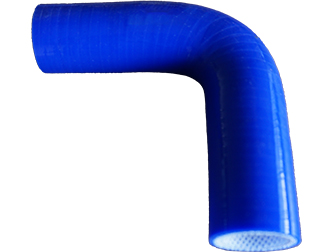
Fuel cell systems require careful hose selection because different circuits carry different media and have different material requirements.
In hydrogen fuel cell systems, three main circuits typically require dedicated hose solutions:
Coolant Circuit
Coolant hoses carry deionized water and coolant formulated for fuel-cell applications to manage the thermal output of the fuel cell stack. For coolant circuits, silicone with textile reinforcement is a common construction; the exact reinforcement should be selected according to pressure, dimensional-stability, and cleanliness requirements.
Cathode Circuit
Cathode-side hoses are used for the air/oxygen side of the fuel cell system. Exact gas composition, flow conditions, and cleanliness requirements depend on the stack and system design. Cathode-side hoses require material and construction suitable for the air/oxygen circuit and the cleanliness requirements of the fuel-cell system.
Anode Circuit
Anode-side hoses may be exposed to hydrogen, purge gas, and moisture depending on the system architecture and operating mode. For anode-side gas circuits, constructions with higher-strength reinforcement and a barrier liner may be considered where supported by the application specification.
These examples show that the choice should not be made only by hose diameter. The circuit, transported medium, reinforcement, inner layer, connection method, and installation conditions should all be considered when defining the hose construction.
Fuel cell hose design can also involve additional components. Depending on the application, hose assemblies may integrate aluminum alloy, stainless steel, or plastic connectors, secured with clamps or retaining rings.
Confirm Dimensions, Shape, and Connection Details
Once the operating conditions and construction have been identified, the physical design of the hose needs to be confirmed.
Important dimensions can include:
-
Inner diameter
-
Outer diameter
-
Wall thickness
-
Overall length
-
Bend angle
-
Bend radius
-
Branch position
-
Connection dimensions
The hose shape is also important when installation space is limited. A molded or formed hose may be more suitable than a straight tube when the hose must follow a specific routing path.
Branch spacing can affect both hose construction and manufacturability. Minimum spacing depends on the hose size and construction; specific values should be confirmed for each project. For branches involving metal couplers, additional operating space is required for clamping and tooling.
Bend radius is another consideration that depends on the hose construction. Minimum bend radius varies with reinforcement structure and the presence of inner linings, as these factors affect the overall flexibility of the finished hose. Specific values should be confirmed during the design stage.
These details show why physical design should be considered at the beginning of a custom hose project rather than after the hose construction has already been defined.
Connection details should also be specified. Depending on the application, a hose assembly may use plastic connectors, metal couplers, clamps, retaining methods, or other integrated components. Hose assemblies can include metal inserts and wire or metal reinforcement where required.
Check Applicable Standards and Specifications
The next step is to check whether the application requires a particular industry standard, specification, or customer-defined requirement.
A standard may specify aspects such as dimensions, tolerances, material requirements, or performance characteristics. However, the applicable standard depends on the specific hose and application.
For automotive applications, SAE J20 may be relevant to certain coolant and radiator hose requirements. Design information for some silicone hoses also references SAE J20 when discussing inner diameter, wall thickness, and length tolerances.
Instead of assuming that one standard applies to every silicone hose, buyers should confirm the exact requirements for the intended application.
It is also useful to distinguish between a general material specification and the actual performance requirements of the finished hose. A hose may meet a material requirement while still needing a different reinforcement, geometry, or inner lining for the final application.
For custom projects, dimensional tolerances should also be discussed before production. For tighter dimensional control, fixture-based inspection can be used.
Custom Silicone Hoses for Specific Applications
When a standard hose does not fit the required application, custom silicone hoses can be developed around the actual design and operating conditions.
Customization can involve more than changing the hose diameter or length. Depending on the project, it may include complex shapes, multiple branches, different reinforcement structures, inner linings, wire reinforcement, metal inserts, or other integrated components.
Available constructions can include polyester, aramid, and wire reinforcement, together with fluorosilicone, FKM lining, and metal parts, depending on the application.
For a new project, a drawing or sample is a practical starting point. The basic service conditions should then be provided, such as the medium, temperature, pressure or vacuum, dimensions, connection requirements, and installation space.
These details help determine the appropriate hose construction and identify manufacturing considerations early in the design stage.
Sunrise's experience in custom hose development covers
complex hose shapes for compact installation spaces, multi-branch hoses, off-centred branches, metal couplers, and hose assemblies.
This means that silicone hose solutions can be considered not only for standard hose dimensions but also for applications where the routing, branch configuration, reinforcement, inner lining, or connection design requires a more specific construction.
Providing the design information at an early stage can help identify potential manufacturing issues before production begins and make it easier to develop a hose that fits the actual installation requirements.
If you have a drawing, sample, or specific application requirement, you can contact
SUNRISE silicone hose to discuss the required hose construction and customization options.
FAQ
How long does a silicone hose last?
The service life of a silicone hose depends on temperature, pressure, medium, movement, installation conditions, and material construction. There is no single service-life value that applies to every application. Correct material selection and installation are important for long-term performance.
Is silicone hose oil resistant?
Standard silicone is not automatically suitable for every oil application. Oil type, temperature, exposure conditions, and hose construction should be evaluated. An appropriate inner lining may be required for certain applications.
Is silicone hose heat resistant?
Silicone has good temperature resistance and is commonly used in applications involving elevated temperatures. However, the suitable temperature range depends on the specific silicone compound, construction, medium, and operating conditions.
Is silicone hose fuel resistant?
Not all silicone hoses are suitable for direct fuel service. Fuel type and exposure conditions should be considered, and a fuel-resistant construction or suitable inner lining may be required for some applications.