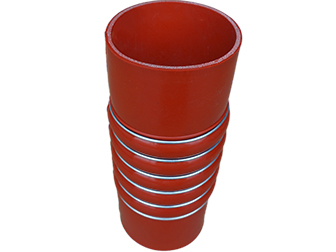
A molded silicone hose provides a defined shape for connecting components within a specified installation space. For OEM buyers and engineers, selecting one involves more than choosing a diameter and bend angle. The hose geometry, material, reinforcement, and operating requirements must be evaluated together.
This guide explains the development and production stages of molded silicone hoses, their common applications, and the requirements that molding alone does not determine.
Key Takeaways
What Is a Molded Silicone Hose?
At SUNRISE, straightforward geometries can be produced through molding, while other configurations may use a hand-built construction method. The proposed production method should be established during drawing or sample review.
From Design Review to Finished Hose
The production details depend on the manufacturing method and hose construction. The following stages outline how a custom project progresses from a drawing to an inspected component.
Geometry and Manufacturing Review
Any proposed changes should be agreed upon before tooling and sample production.
Material and Reinforcement Selection
The drawing defines the hose geometry, while the operating conditions guide the material and reinforcement requirements. Both are needed to assess the design.
Forming and Curing
Because the tooling and forming method varies with the product, buyers comparing quotations should establish what each supplier means by “molded.” The product name alone does not provide a complete manufacturing specification.
Finishing and Inspection
Dimensional inspection focuses on features that affect fitment, such as:
The inspection and test plan should be agreed upon before production.
Common Applications
Automotive Cooling and Heating Systems
The construction must also suit the coolant, operating temperature, pressure, and applicable specification. A suitable shape does not, by itself, establish suitability for a cooling or heating circuit.
Air-Handling and Charge-Air Connections
Where oil mist or another potentially incompatible medium may contact the inner surface, material compatibility requires separate assessment. A specialized lining may be necessary, depending on the actual exposure.
Industrial Equipment
For a custom project, the drawing should show the relationship between connection points and identify the available installation space. This allows the manufacturer to review the hose as part of the intended assembly rather than as an isolated component.
What Molding Does—and Does Not—Determine
Geometry Must Suit the Production Method
The useful question is not simply whether a supplier can make a “complex hose,” but whether it can manufacture the specified design and verify the features that matter to the assembly.
A Defined Shape Does Not Guarantee Fitment
Sample approval should include a fitment check in the intended assembly where appropriate, rather than relying only on photographs or a general visual comparison.
Molding Alone Does Not Establish Pressure Performance
The compound, reinforcement, dimensions, and operating conditions must be evaluated together. Neither the molded shape nor the number of reinforcement layers should substitute for defined performance requirements and relevant test results for the specified construction.
Material Compatibility Remains a Separate Requirement
Similarly, a general silicone material description does not establish food-contact or other regulatory suitability for a finished hose.
What to Specify Before Requesting a Quotation
A useful quotation request connects the geometry with the operating and acceptance requirements.
|
Information |
What to Provide |
|
Geometry |
Drawing or sample, end diameters, wall thickness, lengths, bends, and connection orientation |
|
Installation |
Critical fit dimensions, tolerances, and available space |
|
Operating conditions |
Continuous and peak temperatures, working pressure, and any vacuum conditions |
|
Media exposure |
Fluid or gas inside the hose and relevant external exposure |
|
Construction |
Required compound, reinforcement, or lining, where already specified |
|
Validation |
Dimensional checks, fitment requirements, and performance tests |
|
Quantity |
Sample quantity and forecasted production volumes |
If a material or construction has not yet been selected, state the application requirements rather than guessing a specification. The manufacturer can then propose a design for review.
Sample Approval and Design Changes
Keeping the drawing, sample approval record, and production specification aligned helps prevent misunderstandings when an order moves into production.
Custom Molded Silicone Hoses from SUNRISE
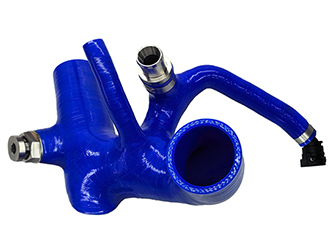
For a custom project, provide the drawing or sample together with the operating conditions and critical installation requirements. This allows the proposed construction to be evaluated against the application, not just the desired shape.
Frequently Asked Questions
Are molded and custom-shaped silicone hoses the same?
Not necessarily. “Custom-shaped” describes the required geometry, while “molded” describes a manufacturing approach. Confirm the proposed production method when reviewing a custom hose quotation.
Can a physical sample be used instead of a drawing?
A physical sample can support the manufacturing review. However, the dimensions, tolerances, material requirements, and acceptance criteria still need to be documented and agreed upon before production.
Can the same hose shape be used with different reinforcement?

Sunrise Silicone Hose Co., Limited


Dirección : Suite 805, No. 341 Jiahe Road, Xiamen City, Fujian Province, China
Correo electrónico : sales@siliconehose-china.com